Secure, Maintain & Extend the Life of Critical Legacy Systems for UK Manufactures.
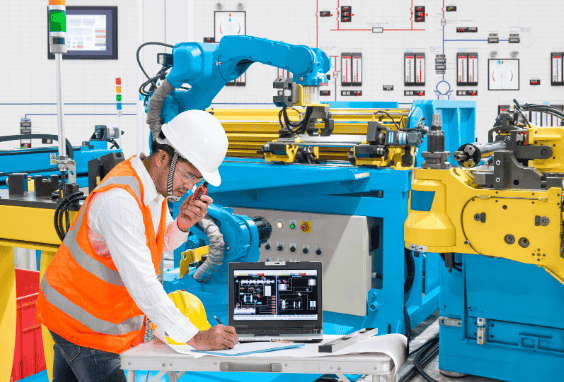
Legacy systems often become the weakest link in cyber security, not because they’re poorly run, but because they were never designed for today’s threat landscape.
Common challenges we help manufacturers overcome include:
A few examples include, Windows XP, Windows 7 and older Windows 10 builds.
Including, servers, PCs, and industrial controllers
We offer support and advice to keep your business safe even when you require the use of a machine that must be kept offline and help to implement this securely.
We support compliance even when using legacy operating systems to ensure your business can still comply with your annual Cyber Essentials, cyber insurance requirements and customer audits.
We support UK manufacturers that experience downtime caused by fragile or poorly understood systems and put in place to mitigate these outages.
We understand using legacy operating systems is sometimes unavoidable, that’s why we help you secure, stabilise, and plan around your legacy environment.

We work with manufacturing and engineering SMEs across Southern England, supporting everything from single-site factories to multi-location operations.
Less downtime and helping us plan and improve for the future!


Request a quote from an IT provider that understands your business.
Without Replacing What Still Works
Maintaining legacy IT doesn’t have to mean accepting higher risk.
Syn-Star helps UK manufacturers:
Minimise cyber risk on unsupported systems
Prevent ransomware spreading into production networks
Maintain uptime on critical machinery
Meet Cyber Essentials and customer security requirements
Plan realistic modernisation timelines without disruption
We take time to understand how your factory actually runs, not how a textbook says it should.
Legacy machines are separated from your main business network using VLANs, firewalls, or micro-segmentation. This prevents malware or ransomware from spreading into production systems.
When vendors no longer release patches, we deploy layered security controls that block exploit techniques, suspicious behaviour, and unauthorised traffic even without OS updates.
Legacy systems should never be exposed directly to the internet. We implement MFA-secured VPNs, bastion hosts, and tightly controlled access paths so only authorised users can connect and only when required.
We remove unnecessary services, restrict permissions, enforce least-privilege access, and apply tailored security baselines designed specifically for older systems.
Where supported, we deploy EDR, network anomaly detection, and centralised logging to identify threats early, even on older devices.This allows your legacy systems to continue operating safely, without disrupting production or forcing premature replacement.
Our technicians get continuous learning and development in the latest industry tools to ensure our support is always ahead of the game!We also offer continuous learning to all fully managed support customers free to all through our Learning Centre
We understand that changing IT providers in a manufacturing environment can feel daunting. That’s why we’ve removed the risk.
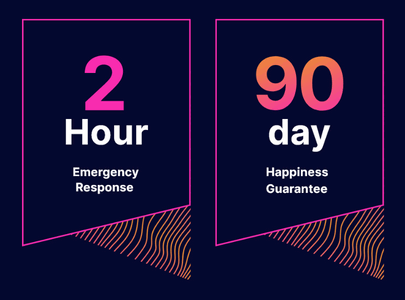
If you’re not completely satisfied within the first 90 days, you can cancel your IT support contract, no quibbles, no penalties.
We’re confident you’ll stay because our service works.
When production is at risk, speed matters.
Our rapid response SLA ensures help is available when you need it most.
Many manufacturers believe Cyber Essentials is impossible with legacy systems, it isn’t!
We regularly help businesses:
Achieve Cyber Essentials without replacing legacy machines
Pass customer and supply-chain security audits
Improve insurability and reduce cyber-risk exposure

We understand switching providers can be a big decision so we’ve made a simple 4 step process.
Our friendly team is ready to discuss switching to Syn-Star for your IT needs.
Get specialist IT support designed for UK manufacturers.
🔧 Troubleshoot Issues
😤 Discuss Frustrations
🚀 Boost Productivity
🛡️ Enhance Cybersecurity
Yes legacy systems can be secured without immediate replacement, and in fact this is extremely common in UK manufacturing. Many factories rely on older CNC machines, SCADA controllers, Windows XP/7/10 devices, or bespoke industrial software that simply can’t be replaced without halting production or investing heavily in new machinery.
At Syn-Star, we specialise in protecting legacy infrastructure through a combination of:
✔ Network Isolation & Segmentation
We separate outdated machines from the main business network, reducing the chance that malware or ransomware can spread to them. This often involves VLANs, firewalls, or micro-segmentation.
✔ Virtual Patching
Where software vendors no longer issue patches, Syn-Star deploys compensating controls — tools that monitor behaviour, block suspicious traffic, and prevent known exploit patterns even without operating system updates.
✔ Secure Remote Access
Legacy systems should never be exposed to the internet. We implement MFA-secured VPNs or bastion hosts to ensure only authorised staff can access these machines. They should only be used for the standard tasks required only.
✔ Hardening & Lockdown
We disable unnecessary services, enforce least-privilege access, and apply tailored security baselines.
✔ Continuous Monitoring
EDR tools, network anomaly detection, and SIEM logging allow real-time detection of threats, even on older devices.
This approach keeps legacy systems running safely, without disrupting production or forcing expensive upgrades.
A legacy IT system typically refers to older hardware, operating systems, or software that are still critical to production but are no longer supported by the manufacturer. In manufacturing, this often includes CNC machines, PLCs, SCADA systems, bespoke applications, or PCs running older versions of Windows such as XP, 7, or out-of-support Windows 10 builds.
Yes. Legacy systems are extremely common across UK manufacturing and engineering businesses. Many production environments rely on older, proven equipment that cannot be easily upgraded without causing downtime, requiring re-certification, or incurring significant capital costs.
Yes. Legacy systems can be secured without immediate replacement. While they may no longer receive vendor patches, security can be achieved through network isolation, restricted access, compensating controls, continuous monitoring, and strict system hardening.
Running unsupported operating systems without protection is risky, but with the right controls in place, they can still be used safely in manufacturing environments. The key is ensuring they are not exposed to the internet, are tightly locked down, and are protected by additional security layers.
Legacy systems are a common entry point for ransomware and malware. If not properly segmented, an attack on one outdated device can spread across the entire network, potentially halting production, corrupting machine controllers, or causing significant downtime.
Network segmentation separates legacy machines from the rest of your IT network. This prevents cyber threats from spreading and limits the impact of an attack. For manufacturing, segmentation is one of the most effective ways to protect older production equipment.
Yes. Cyber Essentials can often be achieved even with legacy systems in place. The focus is on risk management rather than replacement. With proper isolation, access controls, and documentation, many manufacturers successfully pass Cyber Essentials audits without removing legacy equipment.
Where supported, antivirus or endpoint detection tools should be used. Where traditional antivirus is not compatible, alternative security controls such as application whitelisting, traffic monitoring, and behaviour-based detection can be implemented instead.
Legacy systems should never be directly accessible from the internet. Secure access is provided using VPNs, multi-factor authentication (MFA), and controlled jump hosts, ensuring only authorised users can connect for specific tasks.
No. A properly designed legacy security strategy is built to protect systems without affecting performance or uptime. Controls are applied around the system, not in a way that interferes with how machines operate.
Virtual patching uses security tools to block known vulnerabilities and exploit techniques at the network or application level, even when the operating system itself can no longer be patched by the vendor.
There is no fixed lifespan. With the right protections, monitoring, and documentation, legacy systems can remain in use for many years. The key is understanding risk, maintaining visibility, and having a long-term modernisation plan.
There is no fixed lifespan. With the right protections, monitoring, and documentation, legacy systems can remain in use for many years. The key is understanding risk, maintaining visibility, and having a long-term modernisation plan.
Yes, but on your terms. A good IT partner helps you plan realistic, phased upgrades that align with production schedules and budgets rather than forcing rushed or unnecessary replacements.
Manufacturing legacy systems require specialist knowledge. A provider without experience may push risky upgrades or apply inappropriate security controls. Specialists understand production environments, machine dependencies, and how to secure systems without disrupting operations.
Manufacturing legacy systems require specialist knowledge. A provider without experience may push risky upgrades or apply inappropriate security controls. Specialists understand production environments, machine dependencies, and how to secure systems without disrupting operations.
















Discover our Learning Centre, designed to empower your business with knowledge and practical insights.
100’s of Blogs, Webinars and downloadable’s that cover essential IT topics to help you stay ahead—whether it’s mastering cybersecurity, streamlining cloud solutions, optimising your IT infrastructure, or boosting remote work efficiency. Gain the tools and strategies to drive your business forward.