


Share this article
A manufacturing-specialist IT provider goes beyond standard IT support by supporting both office IT systems and production environments (OT). While general MSPs typically focus on desktops, servers, and cloud systems, a specialist provider can manage the environments for ERP platforms, CNC machines, and shop floor connectivity, helping reduce downtime by 50–90%. For UK manufacturing businesses, this difference can mean avoiding £1,000+ per hour in lost production.
Most specialist providers also offer faster response times (15–90 minutes) and tailored cybersecurity designed for industrial environments.
Most general MSPs are built around traditional office IT. Their strengths lie in managing email systems, user devices, cloud platforms, and day‑to‑day digital operations. This works well in a standard office environment, but it doesn’t address the complexities of a manufacturing business.
A specialist manufacturing MSP brings a dual skillset: they understand both IT and OT. This means they know how CNC machines behave, how PLCs and SCADA systems communicate, and how sensitive production networks can be. They’re familiar with the realities of the shop floor and the challenges of maintaining equipment that may be decades old.
Key areas of specialist knowledge include:
CNC machines and industrial controllers
PLC and SCADA environments
Integrated office and shop‑floor networks
This broader expertise allows them to support the entire production ecosystem, not just the office.
General MSPs typically measure success by ticket resolution times. In an office environment, that’s perfectly reasonable downtime is inconvenient, but rarely critical.
Manufacturing is different. A specialist MSP understands that downtime directly affects output, delivery schedules, and revenue. Even a short outage can cost anywhere from £1,000 to £5,000+ per hour, depending on the production line.
Because of this, their focus shifts from reactive support to production continuity. They prioritise:
Preventative monitoring to catch issues early
Asset registers to track ageing equipment
Long‑term technology alignment and upgrade planning
The goal is simple: keep machines running, reduce unplanned downtime, and ensure production stays on schedule.
Manufacturing relies on a unique mix of systems that general MSPs rarely encounter. ERP platforms like Sage or SAP, MRP systems, CAD environments, and engineering file workflows all require deeper understanding to support effectively.
A specialist MSP knows how these systems interact with your infrastructure and what performance levels they require. They understand the impact of slow CAD file load times, the importance of reliable MRP data, and the need for server uptime targets of 99.9% or higher.
They’re equipped to support:
This ensures your operational systems remain fast, stable, and aligned with production needs.
General MSPs often provide basic endpoint protection and standard cybersecurity measures. While that may be enough for an office, manufacturing environments face very different threats, especially around OT systems that can’t easily be patched or replaced.
A specialist MSP builds cybersecurity around the realities of production environments. This includes:
With 24% of manufacturing firms targeted by ransomware, compared to 18% in other sectors, manufacturers need security designed specifically for their environment not a generic office‑IT approach.
Most general MSPs operate 9–5, which aligns with office hours but not with the demands of a production environment. Manufacturing often starts early, runs late, and sometimes operates around the clock.
A specialist MSP adapts to this reality. They provide:
This ensures issues are addressed before they impact production, not after.
Lorem ipsum dolor sit amet, consectetur adipiscing elit. Ut elit tellus, luctus nec ullamcorper mattis, pulvinar dapibus leo.
BONUS – You only hear from them if you have an issue
Get a Quote
Please submit the following information to continue with your quote.
A UK manufacturing company with 60 employees was using a general MSP and experiencing 4–6 hours of downtime per month, costing approximately £4,000–£8,000/month. After switching to Syn-Star, we implemented proactive monitoring and network segmentation, downtime was reduced by 68% within 3 months, improving production output and staff efficiency. Plus cyber security was hugely increased.
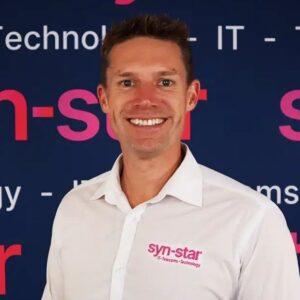
Giles Cleverley founded Syn-Star in 2002 shortly after graduating from Portsmouth university with an honours degree in Business & Economics.
His extensive knowledge and experience in IT strategy and business technology solutions. He is passionate about driving innovation and delivering tailored IT support that helps UK small and medium size businesses thrive. Under his leadership, Syn-Star continues to provide cutting-edge managed IT services designed to meet the evolving needs of modern organisations.
Learn more about IT Support








Share this article
Sign up to our newsletter